
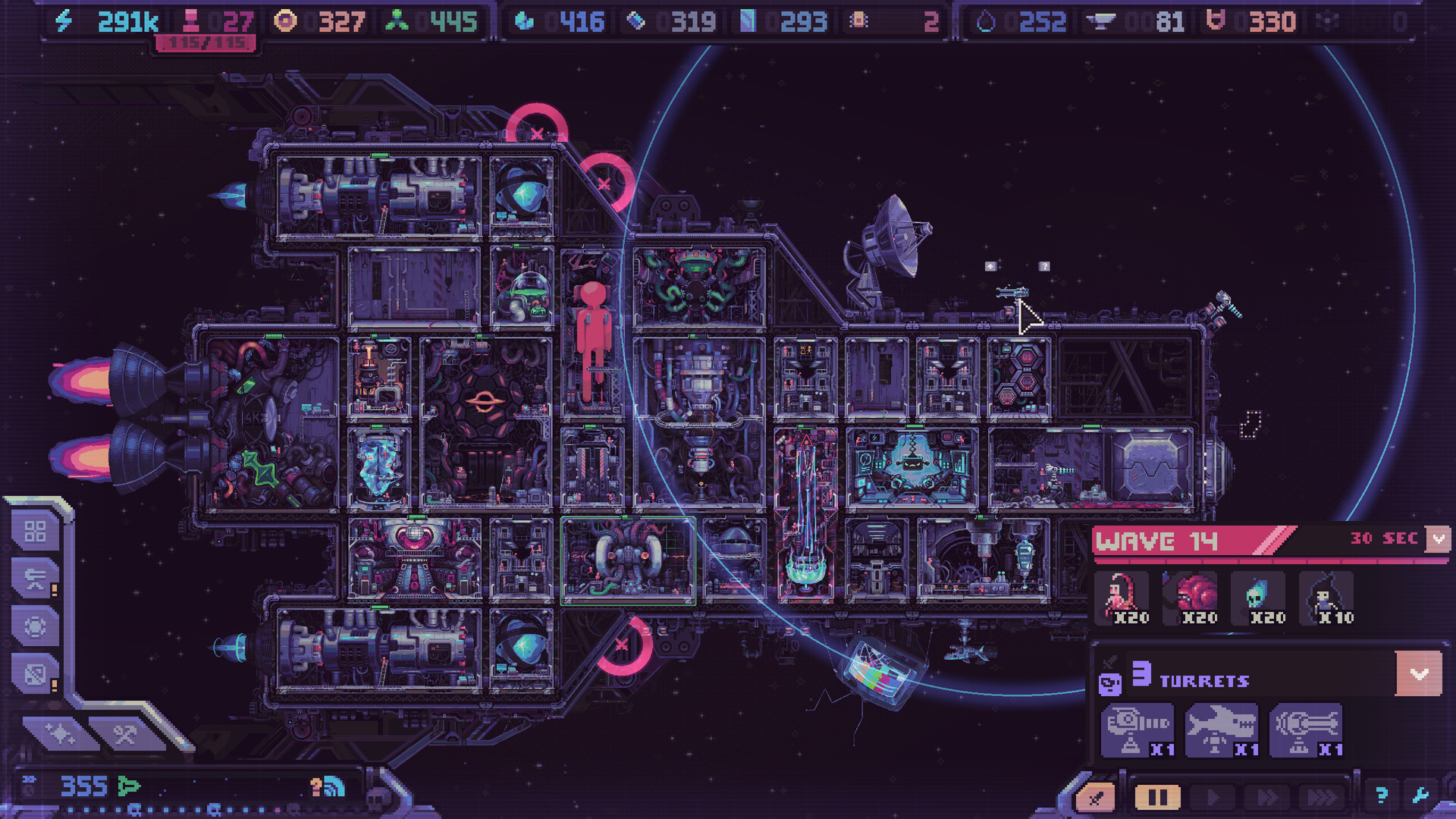
Official Steam screenshot · © 2026 Konfa Games / tinyBuild
Start with the problem the next destination could solve
The useful route is the one that fits the ship's present situation. Identify whether the immediate need concerns materials, a useful modifier or another opportunity before committing resources to travel. This connects exploration to management, instead of treating every revealed destination as equally valuable regardless of the economy and defenses currently aboard the vessel.
Compare the possible help with the cost of reaching it. A destination that would be useful to a different build may not address the constraint limiting the current run. Use the current ship as the starting point, then evaluate the route as an opportunity to support that arrangement rather than a reason to abandon its needs without a clear alternative.
Account for the engines behind your route
The exploration material connects engine investment with access to additional opportunities. Reaching more destinations is therefore part of an economic choice, not simply a free increase in options. The resources and Fuel committed to movement should be considered alongside the production and defense that the same ship must continue supporting.
Do not judge a travel upgrade only by the number of opportunities it might reveal. Ask whether the extra commitment is useful for the problem you are trying to solve now. This planning approach does not promise a universal engine count or a best speed; it connects the known cost of movement with the likely purpose of the next route decision.
Keep ship mass in the travel picture
The management devlog links ship mass and propulsion with exploration opportunities. That means hull growth can affect more than internal space or enemy routes. When considering a larger ship, include the movement demands in the review so the construction choice is not evaluated as though the vessel's ability to travel were independent of its growing systems.
An expansion can have a useful economic or defensive purpose while still changing what the ship needs to keep moving. Review that support before assuming the next available destination will remain equally practical to reach. The important relationship is between the current vessel, its propulsion and its resources, rather than an invented travel formula applied to every layout.
Read fog of war as incomplete information
The developer describes fog of war on the galaxy map. A route decision can therefore involve information that is not fully revealed at the moment you are considering it. Use what the game actually shows, while distinguishing a known destination type from an exact account of every narrative choice or reward waiting there.
This distinction matters when comparing a destination with an immediate ship requirement. A promising category can suggest a direction without guaranteeing the particular outcome you want. Avoid committing the entire plan to an assumed encounter that has not been revealed, especially when the current economy already needs support that the destination may not provide in the expected form.
Treat star types as categories, not event scripts
The exploration devlog describes roughly 15 star types. That dated scope gives the map variety, but it does not mean a revealed type identifies the exact narrative event. Keep the category and the eventual encounter separate when using the map to plan, rather than turn a destination label into a guaranteed reward sequence.
Read the requirements of the event when they become available. Consider what it asks you to spend or give up and how that affects the present ship. The collected material does not establish a complete release event-probability table, so a route plan should remain responsive to the actual choice shown rather than an assumed statistical result.
Distinguish event modifiers from shop modifiers
The developer describes events and shops drawing modifiers from different pools. A reward associated with an event should therefore not automatically be treated as something any shop can sell. This gives exploration its own role in shaping a run, because the source of an interaction matters when deciding where to look for equipment support.
If the plan depends on a particular kind of modifier, consider that source distinction before spending around the expectation of finding it elsewhere. Read what the reward applies to and whether the relevant module or defensive arrangement exists. An event interaction can be useful, but it still needs to fit the ship rather than become an unrelated bonus collected without purpose.
Evaluate event requirements before committing supplies
The exploration brief emphasizes reading conditions before sacrificing workers or spending scarce resources. Those choices can affect production, movement and defense after the event is over. Consider the resource relationship behind the offer, not just the appeal of the reward, so the route decision remains connected to the systems that are keeping the run viable.
Compare the offered benefit with the immediate cost to the current arrangement. If a choice removes something the ship depends on, identify how that need will be met afterward. This is an editorial decision method based on the documented conditional encounters, rather than a claim that every event has one universally correct option or a known best outcome.
Reassess the route as the ship changes
A plan made before an expansion or a new equipment choice may no longer address the current bottleneck. Review the destination, movement cost and intended benefit again when the ship's needs change. Treat the map as part of an adaptive run instead of following a fixed itinerary that assumes every encounter and resource situation will remain favorable.
Use the production page for shortages, the power page for connected operating constraints and the build page for modifier-driven decisions. The module reference helps identify the documented roles behind event examples. These links support a route choice grounded in the vessel you have, without claiming you can visit every star or assigning unverified probabilities to a particular reward.
Connect a reward to a working system
When an event offers a conditional modifier, identify which part of the ship would use it. Compare that module or defensive role with the equipment actually present, then inspect the resource or workforce commitment the choice asks you to make. A reward can sound useful while addressing a different arrangement from the current build. This review helps keep the destination decision connected to a functioning system rather than treating every named bonus as equally valuable regardless of its conditions.
Use the same method before investing in additional travel opportunities. Describe the need the extra destination is intended to address and weigh it against the Fuel and support required to reach more choices. The source material describes those trade-offs without establishing a universal itinerary. A route is therefore best evaluated as part of the current ship's economic and defensive plan, with the actual event requirements read when they are revealed instead of assumed from the star's category alone.
Sources and version notes
- Devlog #3 — Galaxy Exploration and Choices · 2026-08-14
- Devlog #1 — Base Building and Ship Management · 2026-05-23
Source dates identify the announcement or discussion behind the information. Historical demo rules are distinguished from the full-release changes described in the article.
Send a correction →