
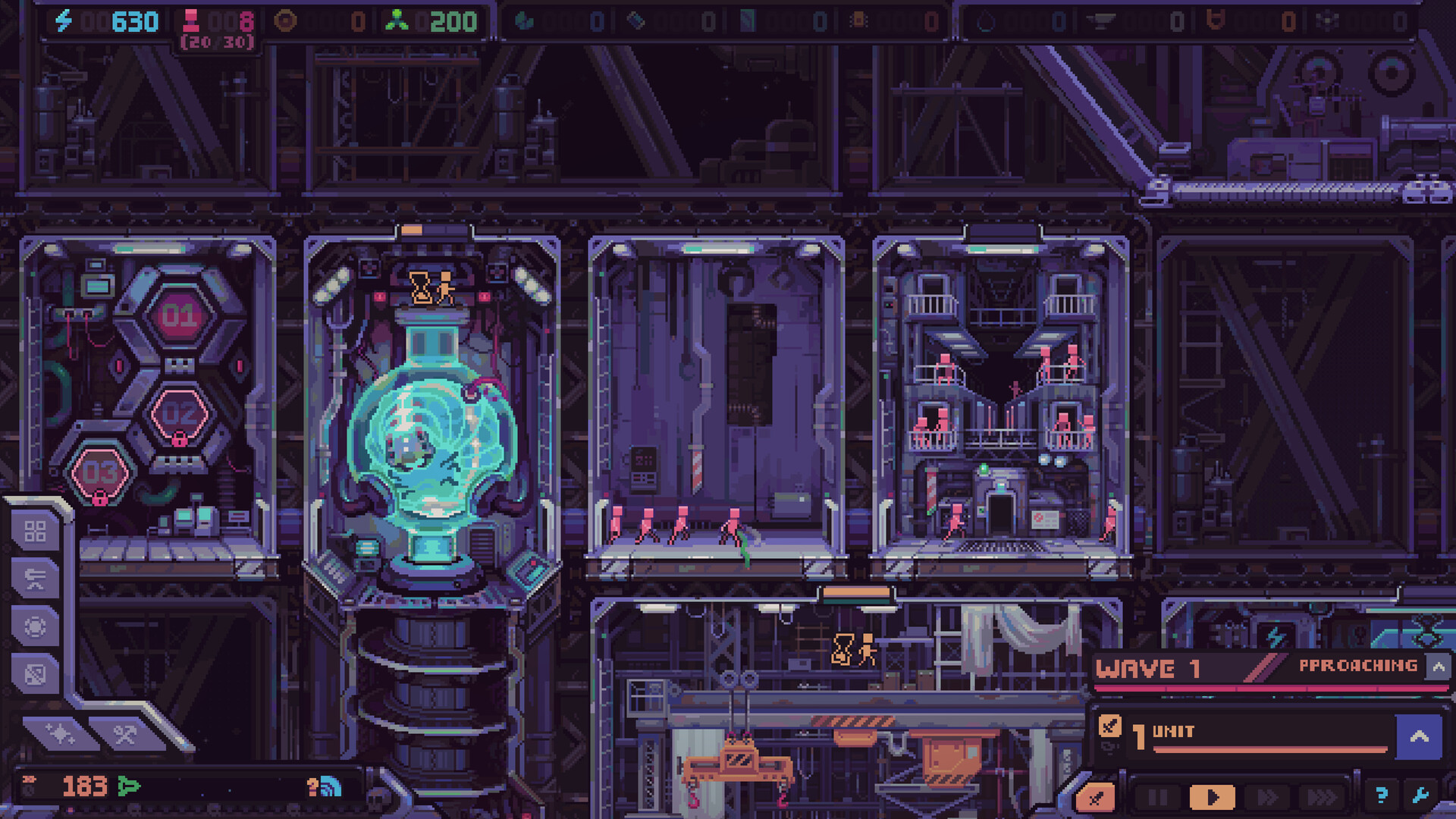
Official Steam screenshot · © 2026 Konfa Games / tinyBuild
Separate the container, kit and finished equipment
A container choice, the kit it provides and the equipment you construct are separate steps. The September update changed the shop from individual offers to themed containers, so choosing a useful category does not mean selecting a guaranteed exact module. Treat the resulting kit as an option to evaluate against the current ship, not a complete improvement that has already been paid for.
Construction still has its own requirements. Before committing to a purchase, consider what the ship can build and what support the finished system would need. Keeping those steps distinct prevents an attractive shop decision from being mistaken for a solution that will function immediately, regardless of the resources, workforce or space currently available.
Choose the category that addresses the bottleneck
The developer describes themed offers as a way to connect the purchase with the type of help needed. If the immediate problem is production, inspect the module-oriented choice; if the defense needs attention, inspect the turret-oriented choice. Start with the problem on the ship rather than pick a category because it sounds strongest without considering the present situation.
This is a directional decision, not a promise about the specific kit inside. A useful category narrows the purpose of the purchase while leaving room to adapt to the contents. Judge what you receive by the role it can fill now, rather than assume the container has failed merely because it did not supply an exact item from a fixed build list.
Check construction requirements after receiving a kit
Obtaining a kit does not remove the cost of building its equipment. A new option can still be unavailable if the necessary materials or construction support are missing. Inspect that requirement directly before buying again, because repeated acquisition does not automatically solve the separate problem that prevents the first useful kit from becoming a working system.
Consider whether the module or turret addresses the actual shortage once it is built. If it creates more unsupported demand, ownership alone does not make it the right next commitment. Compare the construction decision with the ship's immediate needs, using the production and power pages to investigate resource support when the equipment itself is not the limiting factor.
Understand the Chamber's kit-production role
The September update states that humans assigned to Despot's Chamber can generate random module kits. This gives the Chamber an equipment-acquisition role alongside the choices made in the shop. The described output is random, so staffing it should not be presented as a way to order a particular missing module with a guaranteed result.
Evaluate the available workforce in the context of the ship as a whole. Assignments used for kit production are part of the management decision, not a reason to ignore other useful jobs. Read the resulting equipment as new options and decide whether to construct, keep or sell them according to the needs of the current arrangement.
Use resale to reconsider unsuitable equipment
The developer describes selling unwanted kits in the post-battle shop. That means a kit which does not fit the current plan can still be part of a later purchasing decision. Consider its usefulness before committing to construction, rather than assume that every acquired option must become a module simply because it is already in your possession.
Resale should be compared with what the next purchase can help you do. If selling an unsuitable kit helps fund an offer aimed at a real bottleneck, it can make sense within the plan described by the material. The source does not provide a verified release resale-price formula, so evaluate the actual offer shown in the game instead of relying on an invented percentage.
Read the randomization change correctly
The September 25 demo patch changes how repetition works in shop and Chamber kit generation. It makes kits not yet seen in the current run more likely and recently received kits less likely. That is a dated description of a weighting change, not a guarantee that the next offer or generation result will be the particular piece of equipment you want.
Do not interpret reduced repetition as a complete container loot table. The patch does not establish exact release probabilities or a guaranteed missing-kit rule. The practical response is to remain adaptable: inspect the result, consider the ship's needs and avoid making the entire run depend on a specific future item appearing after a certain number of attempts.
Compare purchases with the whole working build
A shop choice should fit the hull, production and defensive approach already developing. A kit can be appealing in isolation yet awkward to place, expensive to construct or unrelated to the current weakness. Compare it with the role you need filled, rather than treating the rarity of an offer or the excitement of a new option as sufficient reason to pivot.
The same principle applies when modifiers suggest a new combination. Read the actual condition and the equipment it supports before spending around the interaction. A coherent purchase contributes to a functioning plan, while a collection of individually attractive options can leave the ship without the resources or geometry needed to make any of them work together.
Make the post-battle decision in a clear order
Identify the current production or defensive problem, choose the relevant offer category and inspect the contents. Then compare construction requirements with the present economy before committing to a build. If a kit is unsuitable, consider its resale value as part of the next useful decision instead of automatically turning it into additional operating demand.
Use the module reference to understand documented roles and the build page to compare compatible combinations. The resource guide helps when a good option cannot be supported, while the tips page explains why current output needs context. Together, those checks make the shop part of ship management without promising exact drops, fixed reroll costs or a guaranteed purchasing sequence.
Evaluate an offer before committing to a build
For example, a container can provide an interesting kit while the ship's immediate shortage remains elsewhere. Inspect the new option, but do not assume receiving it changes the original priority. Compare its construction needs with the correction that would actually restore the current arrangement. This keeps acquisition from becoming an automatic instruction to build every item, especially when the useful choice is to support the existing economy or address a neglected defensive approach first.
Then decide whether the kit has a role worth preserving in the present plan. If it does not, compare resale with the purpose of a later purchase rather than constructing equipment only because it is available. The documented shop loop allows that distinction between obtaining options and committing resources. Using it deliberately makes random equipment part of an adaptable strategy without assuming the shop can always provide an exact replacement, a known price curve or a guaranteed missing item on demand.
Sources and version notes
- Hull Rupture Launches November 4 + Major Demo Update · 2026-09-14
- Demo Patch v0.10.12 — Rat Turret & Improved Kit Randomization · 2026-09-25
Source dates identify the announcement or discussion behind the information. Historical demo rules are distinguished from the full-release changes described in the article.
Send a correction →