
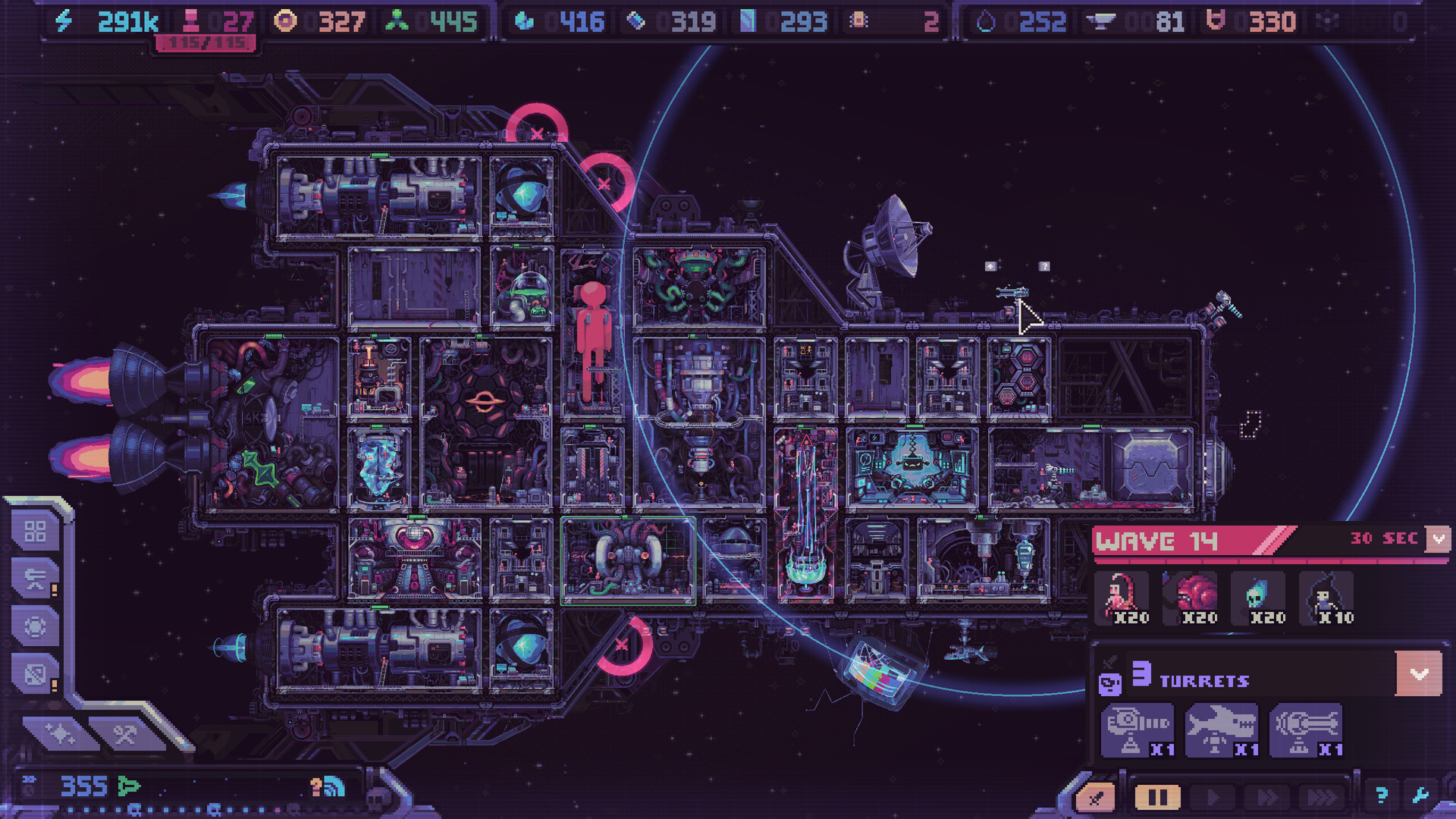
Official Steam screenshot · © 2026 Konfa Games / tinyBuild
Choose the reference that matches your question
A gameplay overview, a module entry and a platform-status answer serve different purposes. Start by identifying the problem you are trying to solve, rather than assume a page with wiki in its title contains a complete answer to every system. A focused reference is easier to use when its scope matches the decision you need to make now.
For a first run, begin with the beginner guide or the overall gameplay guide. For a shortage, use the production or power page; for a weak approach, use the construction or defense page. This keeps the wiki navigable by player need instead of making you sift through unrelated release details before finding the system responsible for the current problem.
Use official announcements for changed rules
Developer announcements establish the version context behind many important answers. The November release FAQ explicitly changes rules that earlier demo descriptions used, making it a stronger reference for those release questions. A detailed older explanation can still be historical information while no longer describing the behavior you should expect in the full game.
Check the date when two pages appear to disagree. Identify whether the newer official statement changes the exact mechanic under discussion, rather than assume every older explanation is equally current. That approach is especially useful for construction, mode continuation and artifact identification, where the release FAQ provides concrete changes instead of merely a broad marketing description.
Understand the full-release empty-slot rule
In the release, any empty module slot can be used for building. The FAQ removes the demo requirement to complete a neighboring module before an otherwise empty slot becomes available. A reference that repeats that restriction without its date can therefore create an unnecessary obstacle for players using the full game.
Use the construction guide for the placement decision, keeping the general rule separate from a particular adjacency bonus. A module's interaction can still make positioning important without restoring the removed universal restriction. This is an example of why a wiki entry should identify the exact rule being described instead of grouping every use of adjacency into one vague statement.
Keep Classic and Endless information separate
The release FAQ also makes Endless its own mode rather than an automatic continuation after Classic. Classic's 20-wave target should therefore be read as the objective of that mode, not as a statement about what every full-game session does afterward. The distinction matters when interpreting a demo account that discusses continuing beyond the earlier completion.
Use the ships-and-modes page to separate content totals, initial availability and documented mode differences. Use the 20-wave page for the practical Classic preparation framework. A reference becomes more useful when it answers the activity you have selected rather than silently carry progression assumptions from another mode or an earlier development build.
Identify artifacts by current descriptions
The November FAQ says artifact icons and names changed, including icons being reassigned to different artifacts. A familiar picture from demo footage is therefore not enough to identify a release effect. Compare the current name and description before assuming an older interaction applies to the artifact you have found.
The September patch provides another example of why dated entries matter: equipment and balance changed during the demo period. A current reference should not combine a historical image, an older balance description and a later release label as though all three came from the same build. Keep the conditions together when evaluating whether a bonus supports your present plan.
Read module entries by role and conditions
The module reference separates documented roles from an exhaustive numerical catalog. It includes sourced examples such as kit production in Despot's Chamber and human conversion in the Bioreactor. Those entries explain useful relationships without pretending the collected material supplies every current footprint, construction cost, output rate or unlock requirement.
For numerical comparisons, consider the build, staffing, level and active modifiers behind the value. A modified output is not automatically a module's base statistic, and an input requirement is not an output rate. This reading method helps you use a reference accurately even when a screenshot or description contains a number that looks authoritative but was recorded under different conditions.
Distinguish official facts from planning advice
A developer statement about a placement rule is different from an editorial recommendation about when to expand. Both can help, but they answer different questions. The first establishes how the system behaves in its documented context, while the second explains a practical way to use that system without claiming a guaranteed outcome for every run.
This distinction is important for build, boss and completion advice. The material supports route planning, compatible weapons and an economy that can fund defense, but it does not establish a universal win-rate ranking. Read those pages as decision frameworks grounded in documented mechanics rather than a promise that a particular list of items always produces the strongest possible ship.
Follow the sources behind a reference
Each article lists the relevant official announcements or directly documented developer discussion. Use those links to check a release change or understand the date attached to a historical statement. A page title alone is not proof that an external wiki is complete, official or current, so the supporting source should remain part of how you judge the answer.
If you find a contradiction, send the page address and the specific detail with its version context through the contact page. That makes it possible to distinguish a new change from an old demo description or a conditional interaction. The purpose of this reference collection is to connect reliable answers to player questions, not fill missing fields with invented module data, event probabilities or boss statistics.
Resolve a contradiction one mechanic at a time
Suppose an older reference requires a neighboring module before construction, while the release game allows a different empty slot. Identify that as a question about the general placement rule, then check the November FAQ's explicit change. Do not assume the contradiction means every detail in the older guide is wrong or that every positional bonus has disappeared. The useful correction is specific to the mechanic whose documented behavior changed between the demo and release.
Apply the same method to modes and artifact identifiers. Check which statement belongs to which version, whether a condition is involved and whether the source actually establishes the detail being compared. This gives the wiki a practical role beyond collecting names: it helps separate an outdated rule from an unchanged relationship and a conditional interaction from a universal property. Use the focused article and its source notes to answer the exact question before carrying assumptions into the next ship decision.
Sources and version notes
- Everything You Need to Know Before Hull Rupture Launches · 2026-11-02
- Demo Patch v0.10.12 — Rat Turret & Improved Kit Randomization · 2026-09-25
- Tutorial resources unavailable — developer reply and player clarification · 2026-06-15
Source dates identify the announcement or discussion behind the information. Historical demo rules are distinguished from the full-release changes described in the article.
Send a correction →